
Colonel Tom Parker
From humble beginnings to music's most influential executive
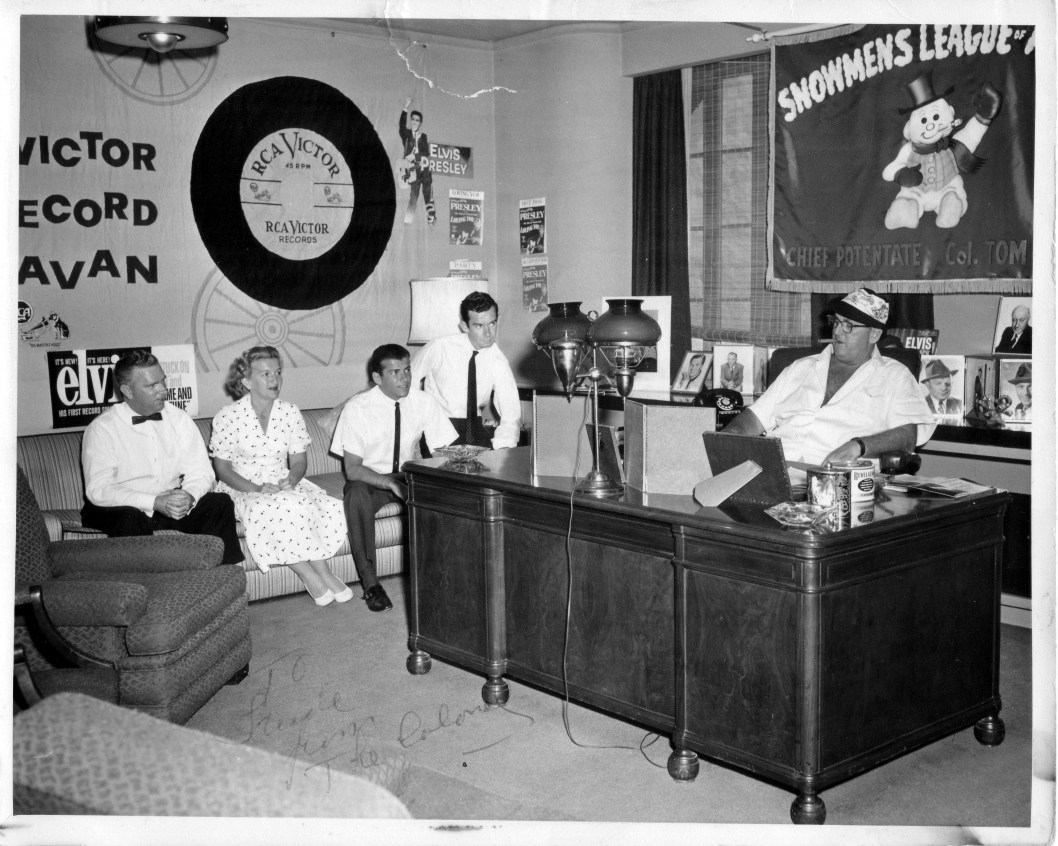
The man behind the king
Colonel Tom Parker was not a carnival operator who stumbled into music management. He was a calculated strategist who understood the machinery of American entertainment before Elvis Presley was born. Born Andreas Cornelis van Kuijk in Breda, Netherlands, in 1909, Parker arrived in the United States as a young man with nothing but ambition and an instinct for spectacle. He worked genuinely in carnivals and circuses, learning the art of promotion, crowd psychology, and the value of mystery. These were not distractions from his later career—they were his education. By the time he met Elvis in 1955, Parker had already managed Eddy Arnold and Hank Snow. He knew how to build a star. He knew how to keep one burning.
Building an empire
Parker's management of Elvis Presley from 1955 until the singer's death in 1977 fundamentally changed the music industry. He negotiated the RCA Records deal that made Elvis a national phenomenon. He orchestrated the Hollywood film career that kept Elvis visible and profitable during the military service years. He controlled every aspect of Elvis's public image with an iron hand, understanding that in modern entertainment, the product and the mythology are inseparable. Parker's methods were controversial even then. Yet the financial empire he built—the merchandising, the film contracts, the touring apparatus—was unprecedented in popular music. By the 1960s, Colonel Tom Parker was not merely managing a singer. He was managing an institution.
Legacy and revision
The Colonel's reputation has been revised repeatedly since his death in 1997. Some have portrayed him as a charlatan who exploited Elvis. Others have recognized him as a visionary businessman operating in an era before modern artist management existed. The truth is more complex. Parker was neither villain nor savior. He was a man of his time, operating by the rules of mid-century American entertainment, where power and secrecy were currency. He made Elvis wealthy beyond measure. It was a partnership like no other. What remains undeniable is his historical significance. Without Colonel Tom Parker, the story of Elvis Presley—and therefore the story of modern music itself—would have been entirely different.